Binaural Beats 101: What They Are, How They Work, and What the Evidence Actually Supports
Binaural beats are a perceptual illusion created when two slightly different tones play in each ear. This guide explains how they work, reviews the real scientific evidence on sleep, focus, anxiety and pain, and gives practical tips for effective use.
By Oleksii Grebeshkov
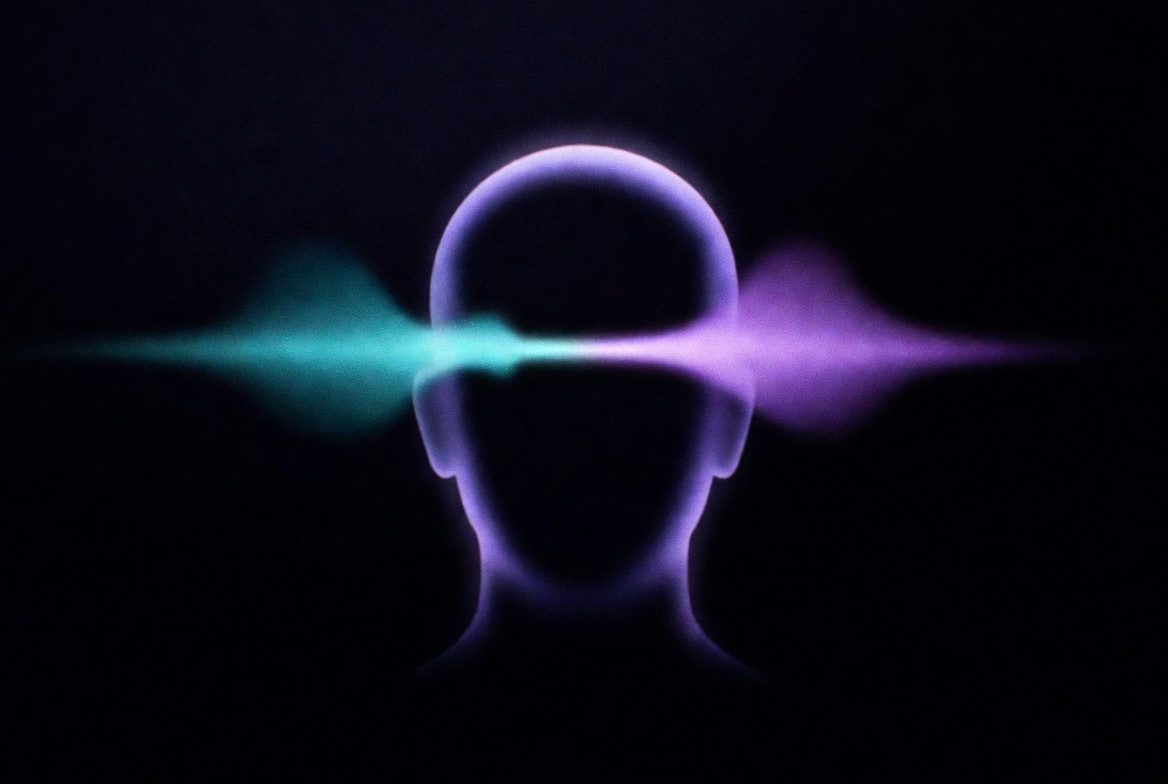
Binaural beats have become a popular tool for sleep, focus, meditation, and stress relief. Apps and tracks promise to shift your brain into specific states simply by playing slightly different tones in each ear. The claims sound almost too convenient. So what is actually happening, and how much of it holds up under scientific scrutiny?
This guide explains the phenomenon clearly, describes the proposed mechanism, reviews the current evidence from meta-analyses and systematic reviews, and offers practical guidance for using them effectively.
What Are Binaural Beats?
A binaural beat is a perceptual illusion created by the brain. When you listen through stereo headphones to two pure tones that differ slightly in frequency—one in each ear—your brain perceives a third tone oscillating at the difference between them.
Example:
Left ear: 200 Hz
Right ear: 210 Hz
Perceived beat: 10 Hz
The beat itself does not exist as a physical sound wave in the air. It is generated inside the brain. This distinguishes binaural beats from monaural beats (which can be heard with one ear or speakers) and isochronic tones (evenly spaced pulses of a single tone).
Key constraints for the effect to occur:
Stereo headphones are required so each ear receives only its intended tone.
The two carrier frequencies are typically kept below about 1,000 Hz (the auditory system’s practical limit for this processing).
The frequency difference is usually under 30 Hz; larger gaps are heard as two separate tones rather than a single beat.
Carrier frequencies around 200–400 Hz are often described as particularly effective for clear perception, though lower carriers (such as 100 Hz) are also commonly used.
The phenomenon was brought to wider scientific attention by biophysicist Gerald Oster in a 1973 Scientific American article, though the basic observation dates back further.
How They Work: The Brainwave Entrainment Hypothesis
The proposed mechanism centers on the superior olivary complex in the brainstem—the first major site that integrates signals from both ears. When the two slightly different tones arrive, neurons there respond to the difference frequency. This signal can then propagate through the auditory pathway.
Researchers describe a *frequency-following response* (or auditory steady-state response): neural activity can become phase-locked or increase in power at the beat frequency. The broader idea is *brainwave entrainment*—the suggestion that external rhythmic stimulation can encourage the brain’s electrocortical activity to oscillate at (or near) the same frequency, potentially shifting mental state.
Brainwave bands commonly targeted include:
| Band | Frequency range | Associated states |
|--------|-----------------|--------------------------------------------|
| Delta | ~0.5–4 Hz | Deep sleep, recovery |
| Theta | ~4–8 Hz | Meditation, drowsiness, creativity, REM-adjacent |
| Alpha | ~8–13 Hz | Relaxed alertness, calm focus |
| Beta | ~13–30 Hz | Active thinking, concentration |
| Gamma | ~30–100 Hz | Higher cognition, binding of information |
Important caveat: a 2023 systematic review of EEG studies found the evidence for reliable brainwave entrainment via binaural beats to be inconsistent. Of 14 studies examined, only a minority clearly supported increased power at the target frequency; others found no effect or mixed results. Methodological differences (duration, carrier frequency, whether beats were masked by noise, participant instructions, EEG analysis methods) make firm conclusions difficult.
In short, the perceptual beat is real and well-documented. Whether it consistently drives measurable, sustained shifts in cortical oscillations across people and conditions is still an open question.
What the Evidence Actually Supports
Behavioral and clinical outcomes have been studied more extensively than pure EEG entrainment. Several meta-analyses provide the best current picture.
Overall effects
A 2019 meta-analysis by Garcia-Argibay and colleagues pooled 22 studies (35 effect sizes) examining memory, attention, anxiety, and pain perception. It reported a medium overall effect size (Hedges’ *g* = 0.45). Effects were stronger with longer exposure times and when listening occurred before (or before and during) a task rather than only during the task. Masking the beats with white or pink noise did not appear necessary.
A later meta-analysis focused on memory and attention similarly found a near-moderate overall effect (*g* ≈ 0.40), though individual study results were mixed depending on frequency band and task type.
Anxiety and stress
Multiple reviews and meta-analyses support modest reductions in anxiety symptoms, particularly in acute or procedural settings (for example, before medical procedures). Effects tend to be short-term. Theta and alpha frequencies are frequently used for this purpose.
Pain perception
Evidence is relatively stronger here. Lower-frequency (especially theta) binaural beats have been associated with reduced pain ratings in several studies and reviews, with one recent analysis reporting a moderate effect size for pain reduction.
Cognition (memory and attention)
Results are mixed but lean positive for certain conditions. Lower frequencies (delta/theta/alpha) have been linked to better recall in some work; higher frequencies (beta/gamma) sometimes aid attention or learning tasks. However, not every study finds benefits, and at least one large study reported worse performance relative to silence under certain conditions. Effects appear to depend heavily on matching the frequency to the desired cognitive state and on exposure timing and duration.
Sleep and relaxation
Lower-frequency beats (delta and theta) are commonly used to promote sleepiness and deeper sleep stages. Some studies report improved subjective sleep quality, easier sleep onset, or increases in deep-sleep markers. The Sleep Foundation notes that evidence remains limited and results vary; more rigorous research is needed. Anxiety reduction may contribute indirectly to better sleep for some people.
Bottom line on evidence strength
Modest, reliable effects appear for short-term anxiety reduction and pain modulation.
Cognitive benefits exist but are smaller, more variable, and frequency- and context-dependent.
Sleep benefits are plausible and supported by preliminary data, but the literature is thinner and less consistent.
Pure brainwave entrainment is not robustly demonstrated across studies.
Individual responses differ. Placebo effects, expectation, and the calming nature of focused listening with headphones likely contribute to reported benefits.
Binaural beats are not a magic switch. They are a low-cost, low-risk auditory tool that can support certain mental states when used thoughtfully.
Practical Tips for Using Binaural Beats
1. Use stereo headphones. Speakers or mono playback will not produce a true binaural beat.
2. Keep volume moderate. Loud enough to hear clearly, soft enough to remain comfortable and non-fatiguing.
3. Match frequency to goal.
- Delta/theta for sleep or deep meditation
- Alpha for relaxed focus or stress reduction
- Low-to-mid beta for analytical work
- Brief higher-frequency segments sometimes used for alertness or insight
4. Give it time. Meta-analytic data favor longer sessions (many studies use 15–30+ minutes). Short exposures can still help, but consistency matters.
5. Consider timing. Listening before a focused task or wind-down period often works better than simultaneous use for some outcomes.
6. Experiment and track. What works for one person may not work for another. Note how you feel before and after sessions rather than chasing perfect frequencies.
7. Combine with good habits. Binaural beats are most useful as a support for sleep hygiene, focused work blocks, or meditation practice—not a replacement for them.
Carrier frequency, tone purity, and whether the beats are pure or layered under ambient sound can all influence the experience. Many modern generators (including browser-based tools) let you adjust these parameters.
Realistic Expectations
Binaural beats are best viewed as a gentle auditory aid rather than a guaranteed neurological intervention. The science supports modest benefits in specific domains—especially anxiety, pain, and certain cognitive or relaxation outcomes—while remaining honest about the mixed evidence for strong, reliable brainwave entrainment.
When used with clear intention, comfortable headphones, and realistic expectations, they can become a useful part of a sleep, focus, or meditation routine. The most important variable is often not the precise frequency but consistent, deliberate use in service of a real goal.
If you are dealing with clinical anxiety, chronic pain, or sleep disorders, binaural beats can complement professional care but should not replace it. As with any tool that influences mental state, pay attention to how your body and mind actually respond.